Main page for this topic: AI math test generator for teachers. Use it to create printable math tests, and pair it with math test generator with answer key when you need answer-key-first output.
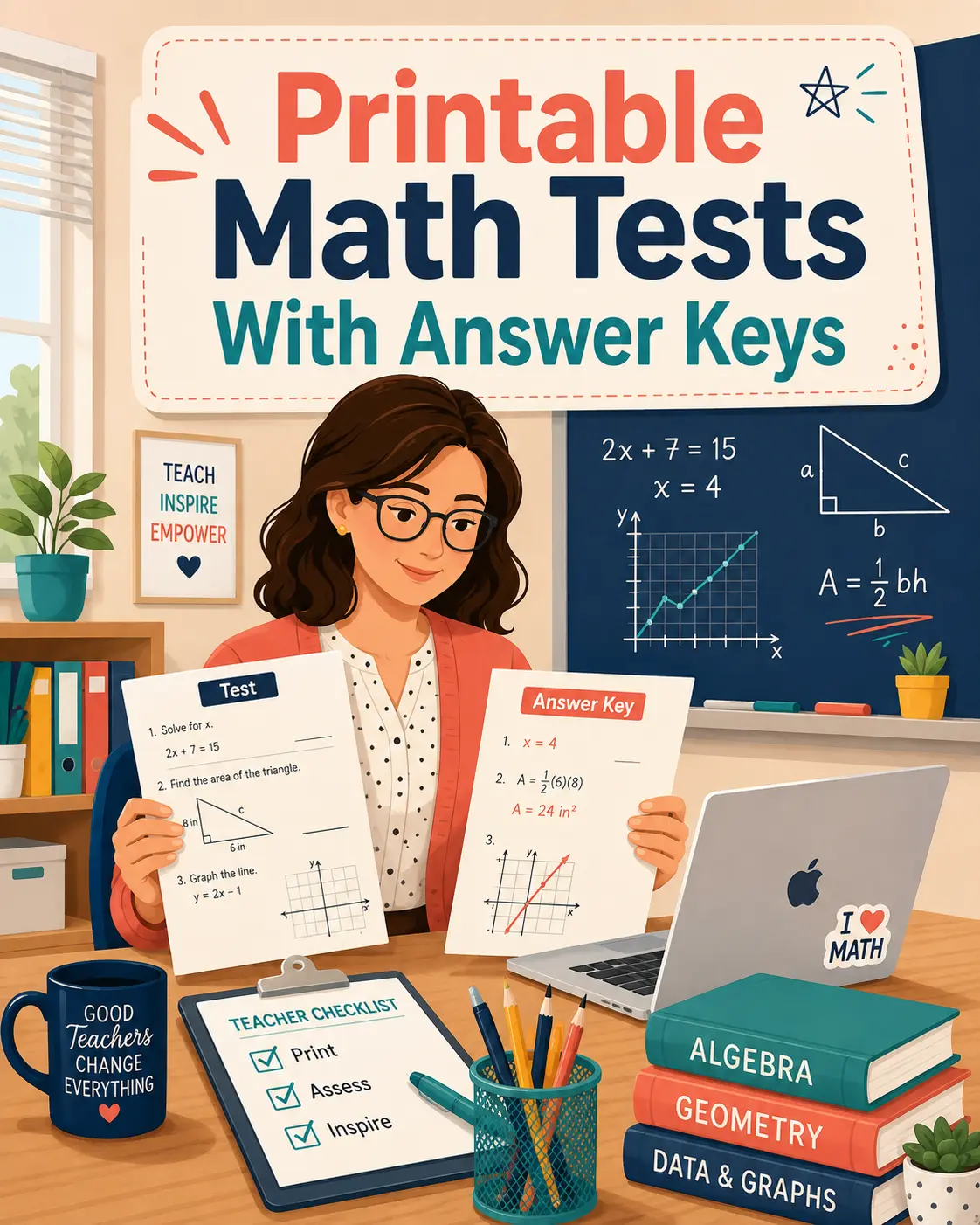
Need a classroom-ready assessment? Use our AI math test generator for teachers to create a printable PDF with answer keys in minutes.
For the full guide, see AI math exams and assessment.
Regional Math Test Generators
In education technology, the words "quiz" and "test" are used interchangeably. But for teachers, they mean very different things — especially in math.
Understanding this difference is the key to understanding why most AI tools fall short of what math educators actually need.
Quiz vs. Test: Why the Distinction Matters
What Is a Quiz?
A quiz is a short, low-stakes assessment. It's often used for:
Quizzes are informal. They can be digital, gamified, or done on paper. Quality varies. They're useful, but they're not what teachers use for formal grading.
What Is a Test (or Exam)?
A test is a formal, summative assessment. It's used for:
Tests require structure. They need balanced difficulty, clear instructions, a predictable number of questions, proper formatting, and an answer key. They're typically printed on paper and collected for grading.
Why This Matters for AI Tools
Most AI tools in education are quiz-focused. They generate quick questions for engagement, practice, or formative assessment.
But when report cards are due, when parents ask how their child is performing, when schools need benchmarks — teachers need tests, not quizzes.
What Printable Math Exams Actually Require
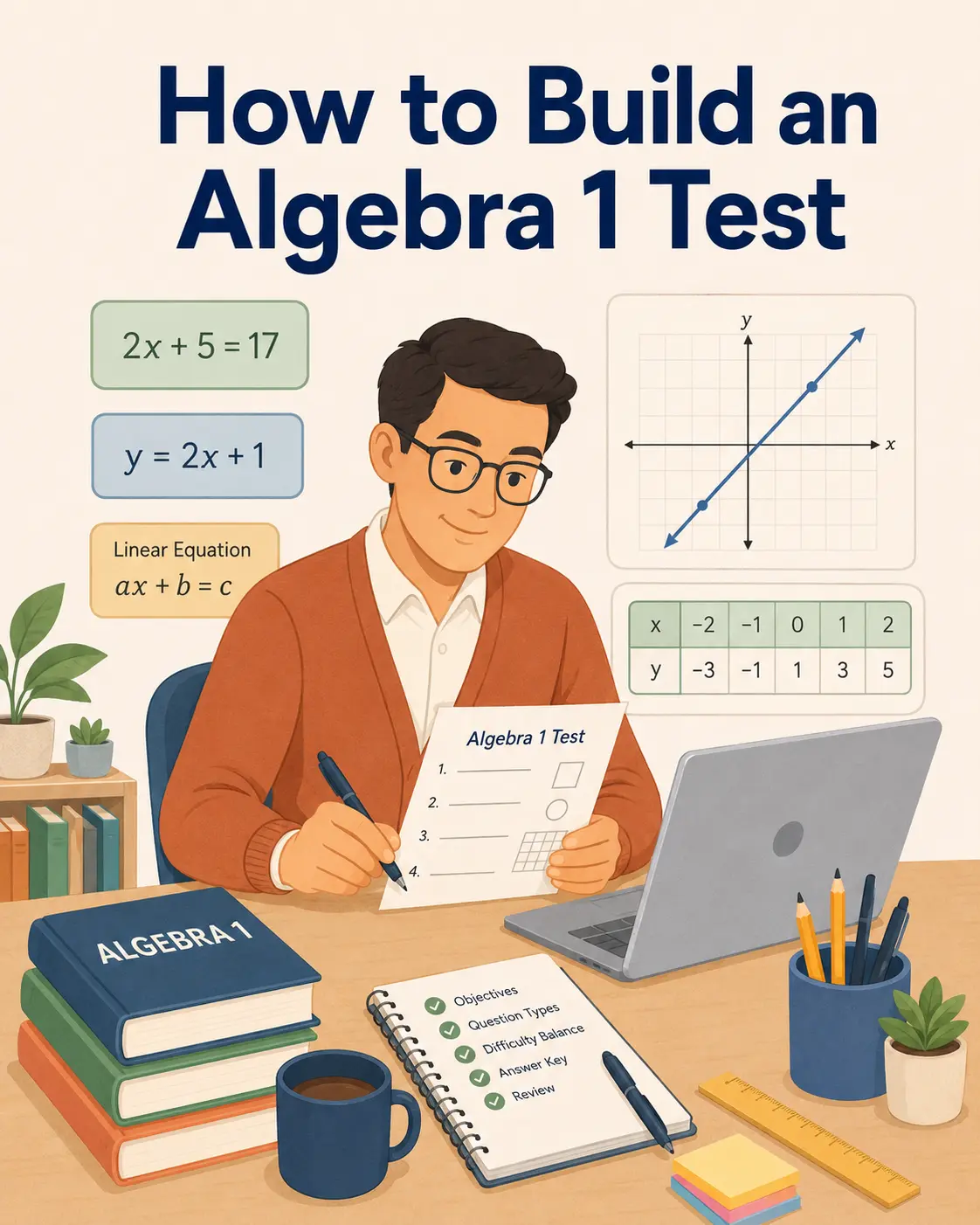
A real math exam that a teacher can hand to students requires:
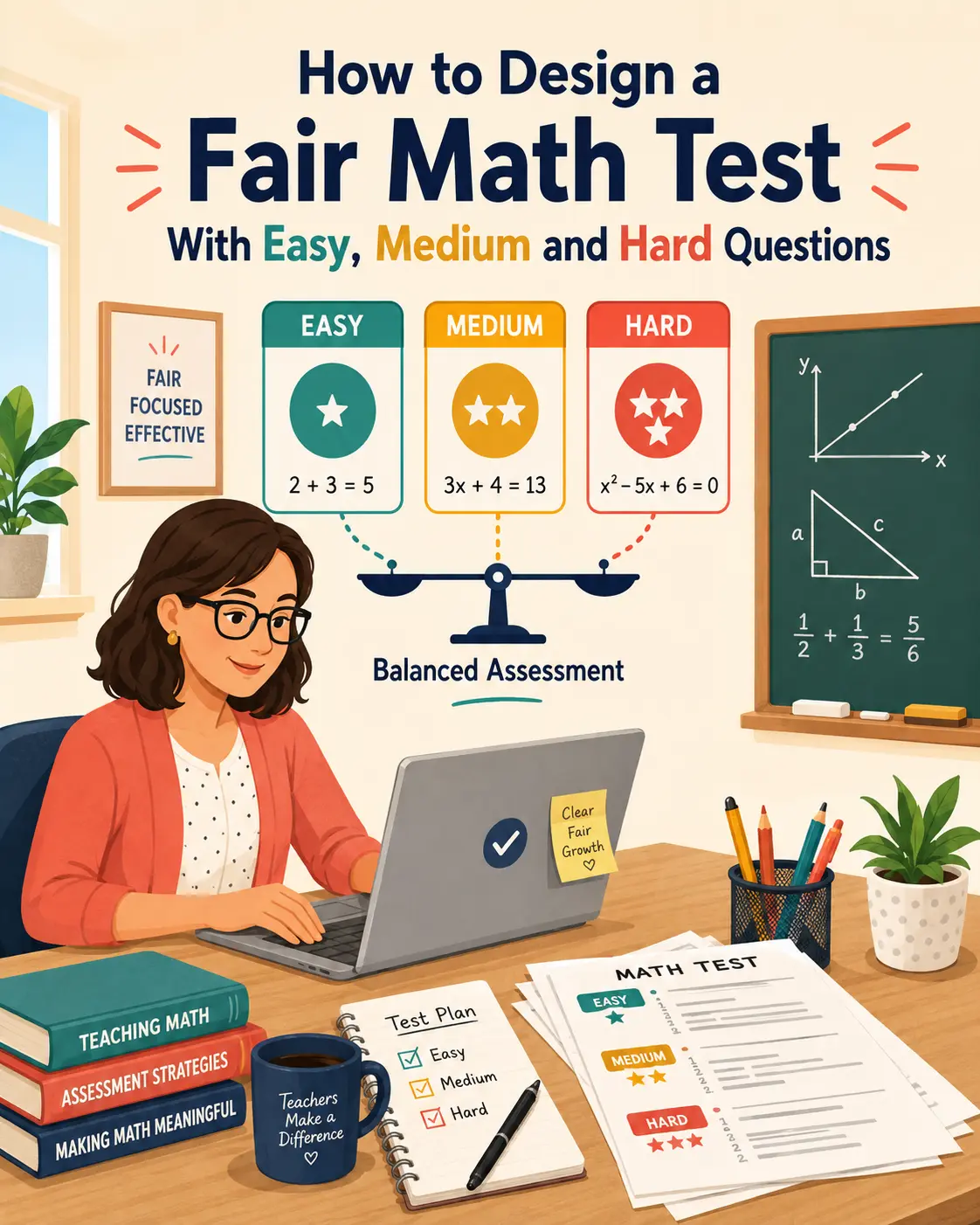
1. Structured Difficulty
A good exam follows a deliberate progression:
Without this structure, an exam is unpredictable — too hard for some students, too easy for others.
2. Proper Math Notation
Math questions need proper formatting. `x² + 3x - 10 = 0` should render as a properly typeset equation, not a string of characters. Fractions, radicals, integrals, and geometric figures all need visual clarity.
3. Print-Ready PDF Layout
Most classrooms still rely on paper. A math test needs to look professional when printed: clear numbering, proper spacing, section headers, and enough room for student work.
4. Complete Answer Key
Every question needs a solution — not just the final answer, but the steps to get there. This helps teachers grade consistently and helps students learn from their mistakes.
5. Equivalent Versions (Form A / Form B)
For retakes, parallel classes, or exam security, teachers need multiple versions of the same test. Same difficulty, same structure, different questions. This is incredibly hard to do manually.
Where Current Tools Fall Short
Online Quiz Platforms (Wayground, formerly Quizizz, Kahoot, etc.)
Built first for engagement and formative assessment in class. They can export or print in some form, but the workflow is designed around live and self-paced digital play rather than a formal, print-ready exam paper with a fixed difficulty blueprint.
Generic AI Tools (ChatGPT, QuestionWell, etc.)
These generate math questions quickly, and some offer standards alignment or Bloom's-level controls. What they generally do not give you is a complete exam artifact: a fixed difficulty blueprint, equivalent versions of the same paper, clean math notation in the printed output, and a print-ready layout in one step.
Traditional Worksheet Generators
Often based on template or question-bank generation with limited variety. Good for drill practice, but typically not designed around structured exam blueprints, worked answer keys, or equivalent test versions.
What Math Teachers Actually Need
The ideal tool for math assessment should:
This sounds like a lot — because it is. Most tools only cover one or two of these. MathQuizily was built to cover all of them.
The Future Is Assessment, Not Just Content
The market is full of AI tools that generate content: questions, worksheets, flashcards, practice sets. But content generation is becoming commoditized.
What's still hard — and still valuable — is assessment generation: creating structured, balanced, printable exams that teachers can actually use for formal evaluation.
That's the gap MathQuizily fills. Not another quiz tool. A math assessment tool.
When a teacher needs a real math test — printable, balanced, and ready for the classroom — MathQuizily is the answer.