MathQuizily ranked #372 in TIME and Statista's World's Top EdTech Companies 2026.Read the announcement
← Back to Blog
⭐ Featured

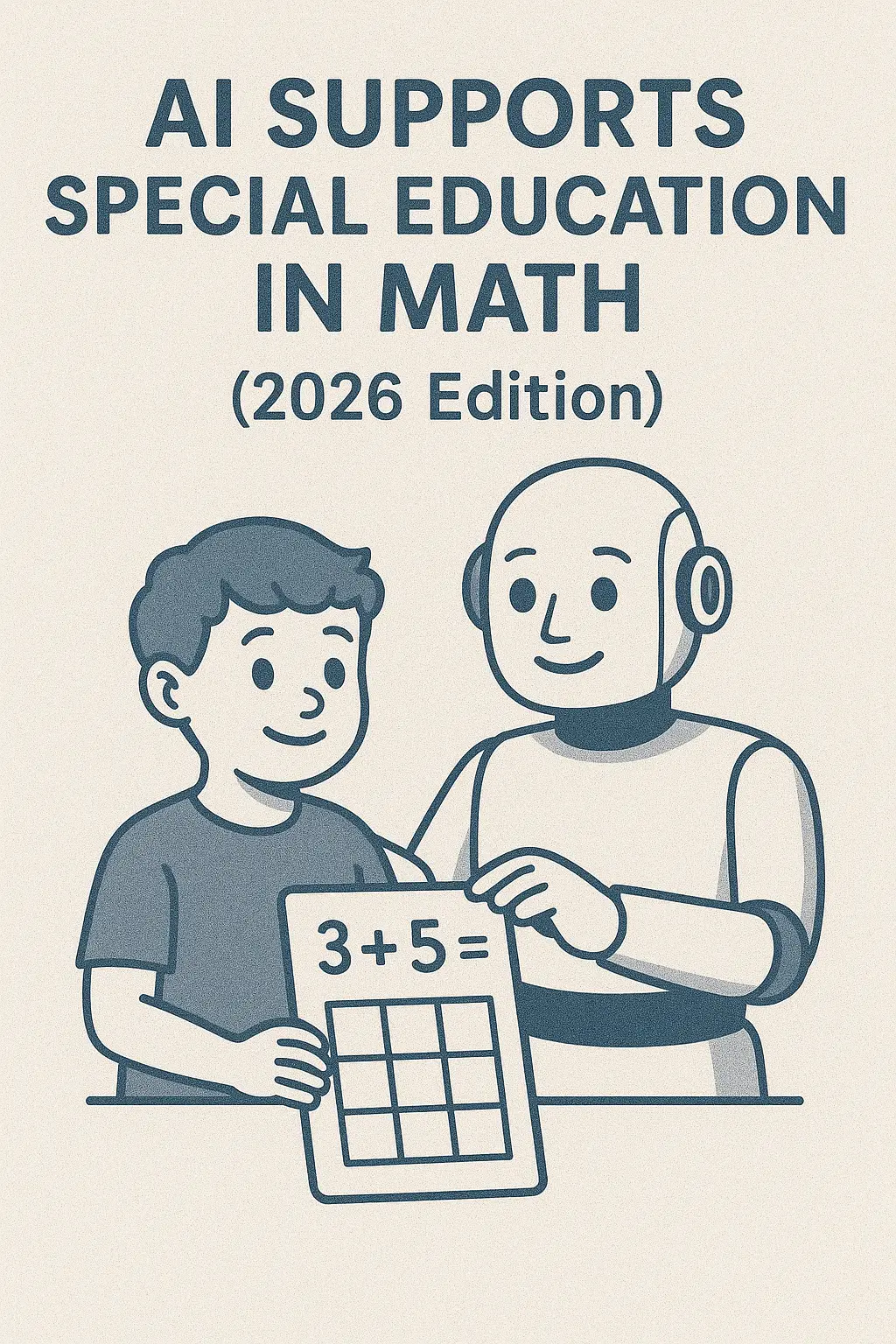
How AI Supports Special Education in Math (2026 Edition)

By Edin Adilagic
#specialeducation#AImathtools#differentiation
How AI Supports Special Education in Math (2026 Edition)
Discover how AI tools help special education students succeed in math through differentiation, accessibility, and personalized printable assessments.

Need a classroom-ready assessment? Use our AI math test generator for teachers to create a printable PDF with answer keys in minutes.

For the full guide, see exam-ready math assessments.

Discover how AI tools like MathQuizily help special education students succeed in math through differentiation, accessibility, and personalized printable assessments.

How AI Supports Special Education in Math (2026 Edition)

Special education continues to evolve in 2026, and one subject consistently presents the greatest challenge:

Mathematics.

Students with learning differences — dyscalculia, ADHD, autism spectrum conditions, processing disorders, working-memory limitations — often struggle with:

  • Multi-step instructions
  • Abstract reasoning
  • Inconsistent assessment structures
  • Unclear question wording
  • Screen-based distractions
  • AI is now transforming how schools support these learners.

    And unlike many EdTech platforms that rely on fast-paced, digital-only problem solving, tools like MathQuizily use AI to build structured, printable, accessible math assessments that work for every student — including those in special education programs.

    Here's how AI is reshaping special education math instruction in 2026.

    ---

    1. AI Helps Teachers Create Multiple Versions of the Same Test

    Differentiation is essential in special education — but also one of the hardest tasks for teachers.

    Traditional workflow:

  • Create a test
  • Adjust difficulty
  • Rewrite questions
  • Simplify language
  • Remove unnecessary steps
  • Reformat the entire layout
  • AI eliminates this burden.

    With MathQuizily, teachers can generate:

  • A standard version
  • A simplified version (step-by-step, easier numbers, shorter text)
  • A challenge version for advanced learners
  • A visual-support version (diagrams, grids, structured space)
  • All aligned to the same curriculum standards.

    This keeps the classroom inclusive — without overwhelming teachers.

    ---

    2. Clear Structure Helps Students With Processing and Working-Memory Challenges

    Many students in special education need:

  • Predictable question layouts
  • Consistent formatting
  • Clear numbering
  • Reduced cognitive load
  • Step-organized tasks
  • AI-generated PDF exams provide exactly that.

    MathQuizily's formatting:

    ✔ Clean

    ✔ Consistent

    ✔ Left-aligned instructions

    ✔ Generous workspace

    ✔ Minimal distractions

    Students know what to expect — which greatly improves performance for those with working-memory limitations, language delays, or executive-function challenges.

    ---

    3. Printable Assessments Reduce Overstimulation and Screen Fatigue

    Digital tools can be overwhelming for neurodiverse learners.

    Problems include:

  • Bright screens
  • Pop-ups
  • Navigation elements
  • Browser tabs
  • Typing instead of writing
  • Scrolling through long pages
  • AI tools that "over-explain"
  • Printable tests solve this.

    The student sees one question at a time.

    The environment is calmer.

    The task feels manageable.

    AI delivers the content — paper delivers the accessibility.

    This hybrid approach is one of the strongest trends in special education in 2026.

    ---

    4. AI Ensures Fair and Accessible Wording

    Students with language or processing difficulties often struggle with:

  • Long sentences
  • Complex phrasing
  • Unnecessary context
  • Ambiguous wording
  • AI can automatically simplify:

  • Vocabulary
  • Sentence length
  • Distractors
  • Formatting
  • Problem structure
  • MathQuizily helps teachers generate:

  • "Plain language" versions
  • Step-by-step reasoning tasks
  • Simplified multi-step problems
  • Accessible word problems with essential information only
  • This ensures tests measure math ability, not reading stamina.

    ---

    5. AI Helps Build Confidence Through Personalized Practice

    Confidence is one of the biggest predictors of success for special education learners.

    AI enables:

  • Targeted practice
  • Controlled difficulty progression
  • Repetition of core skills
  • Positive early wins
  • Measurable improvement
  • Students who normally shut down become engaged.

    MathQuizily's Pay-Per-Test model is especially helpful for SPED teachers because they can:

  • Generate targeted practice only when needed
  • Avoid expensive subscriptions
  • Personalize each assignment
  • Monitor growth through structured assessments
  • ---

    6. AI Supports IEP & SEN Documentation

    IEP (Individualized Education Program) requirements often include:

  • Specific accommodations
  • Reduced test length
  • Alternate formats
  • Simplified language
  • Step-by-step scaffolding
  • AI helps teachers create documentation-ready materials:

  • Multiple test versions showing differentiation
  • Aligned skill lists
  • Clear breakdowns of math targets
  • Individualized test adaptation records
  • This reduces hours of administrative work every month.

    ---

    7. AI Makes Collaboration Between Teachers and Parents Easier

    Parents of SPED students often ask:

    > "What level is my child working at?"

    > "How can I practice this at home?"

    > "Why is the school using this method?"

    AI-generated printable tests:

    ✔ Make expectations clearer

    ✔ Help parents understand skill gaps

    ✔ Allow practice without apps or accounts

    ✔ Show progress over time

    This increases trust and improves home support — especially in districts with high diversity.

    ---

    Conclusion: In 2026, AI Is Transforming Special Education Mathematics

    The future of special education is not digital-only.

    It's personalized + printable.

    AI tools like MathQuizily allow teachers to:

  • Differentiate faster
  • Create accessible assessments
  • Support executive-function needs
  • Reduce overstimulation
  • Simplify language
  • Increase student confidence
  • And—most importantly—ensure that every student is assessed fairly.

    2026 is the year AI finally becomes a true partner in inclusive math education.

    MathQuizily stands at the center of that shift.

    ---

    Related Articles

  • How AI Promotes Fair and Consistent Math Evaluation
  • How AI Saves Teachers Hours – Creating Math Tests with One Click
  • The Future of National Math Tests: How AI Is Changing Preparation Forever
  • The Hidden Problem With AI Worksheet Generators
  • Why MathQuizily Beats IXL and Mathway for Personalized Math Assessment
  • Ready to support every learner? Try MathQuizily today →
    Ready to Create Your Custom Math Test?

    Try MathQuizily's Pay-Per-Test feature today. Only $1 USD / €1.25 EUR / 12.50 SEK per test.

    Create Your Test Now →
    📚 RELATED ARTICLES
    1

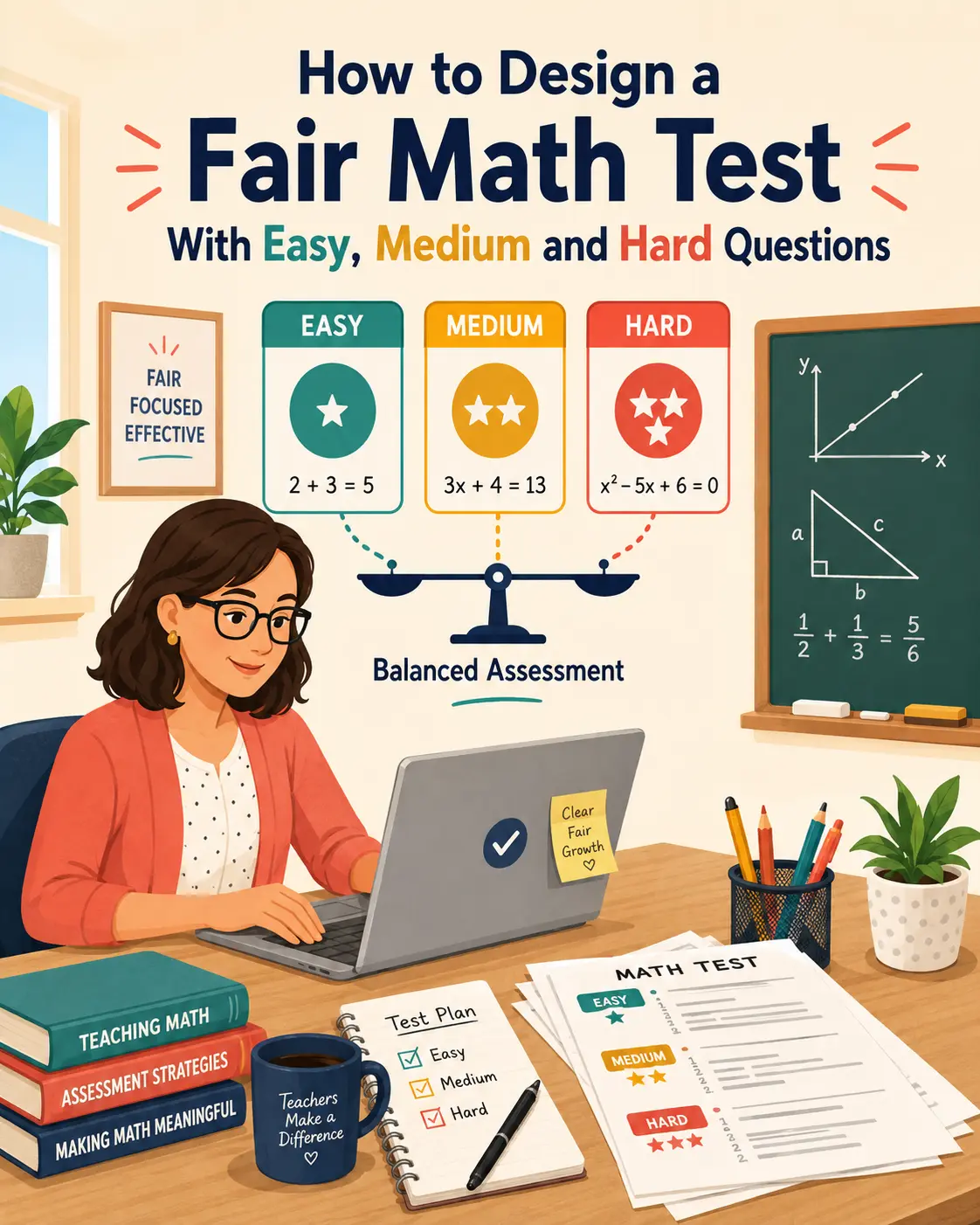
    How to Design a Fair Math Test With Easy, Medium and Hard Questions

    Learn how to design a fair math test using the 5-3-2 model of easy, medium, and hard questions. Create balanced assessments that measure foundational understanding, application, and reasoning.

    Read more
    2

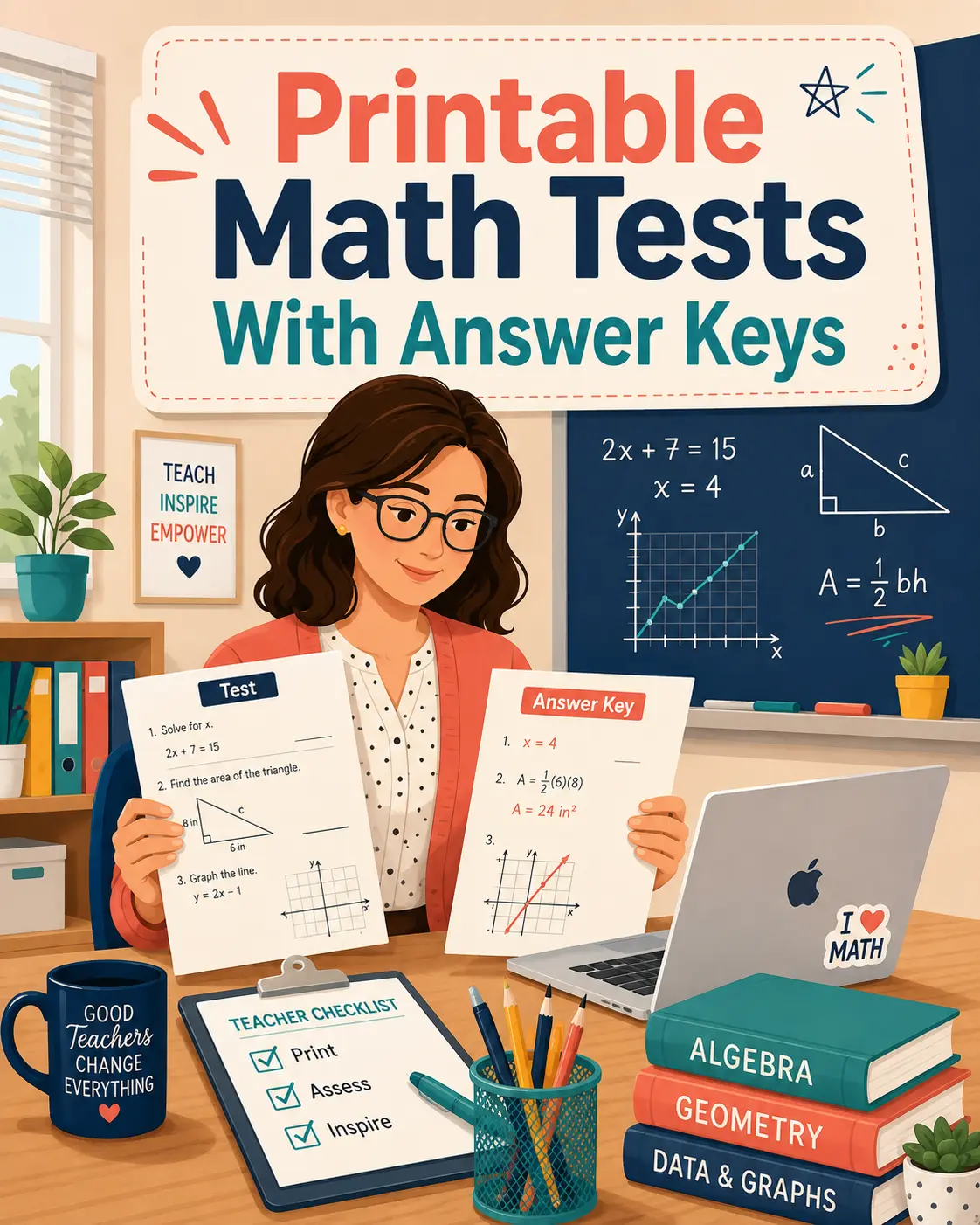
    Printable Math Tests With Answer Keys: What Teachers Should Look For

    A printable math test should be ready for the classroom. Learn what teachers should look for in a test with an answer key, clear formatting, balanced difficulty and real classroom usability.

    Read more
    3

    How to Build an Algebra 1 Test That Actually Measures Understanding

    Learn how to build an Algebra 1 test that measures understanding with varied evidence, multiple representations, balanced difficulty and a worked answer key.

    Read more

    Explore related tools

    Classroom assessment context

    Build the assessment, not just the questions

    MathQuizily helps teachers move from a topic or standard to a printable math test with answer keys, balanced difficulty, and classroom-ready PDF output.

    A useful assessment should make the learning target clear, cover the intended skills, and give the teacher enough information to review the result before students see it. The workflow supports short quizzes, chapter checks, diagnostic tests, homework packets, make-up assessments, and equivalent retake versions.

    Choose a grade, topic, curriculum context, and difficulty level. The generated PDF includes a student version and a separate worked answer key, so teachers can print, review, and grade without reformatting questions or building solutions from scratch. No student account is required to create or print a test.