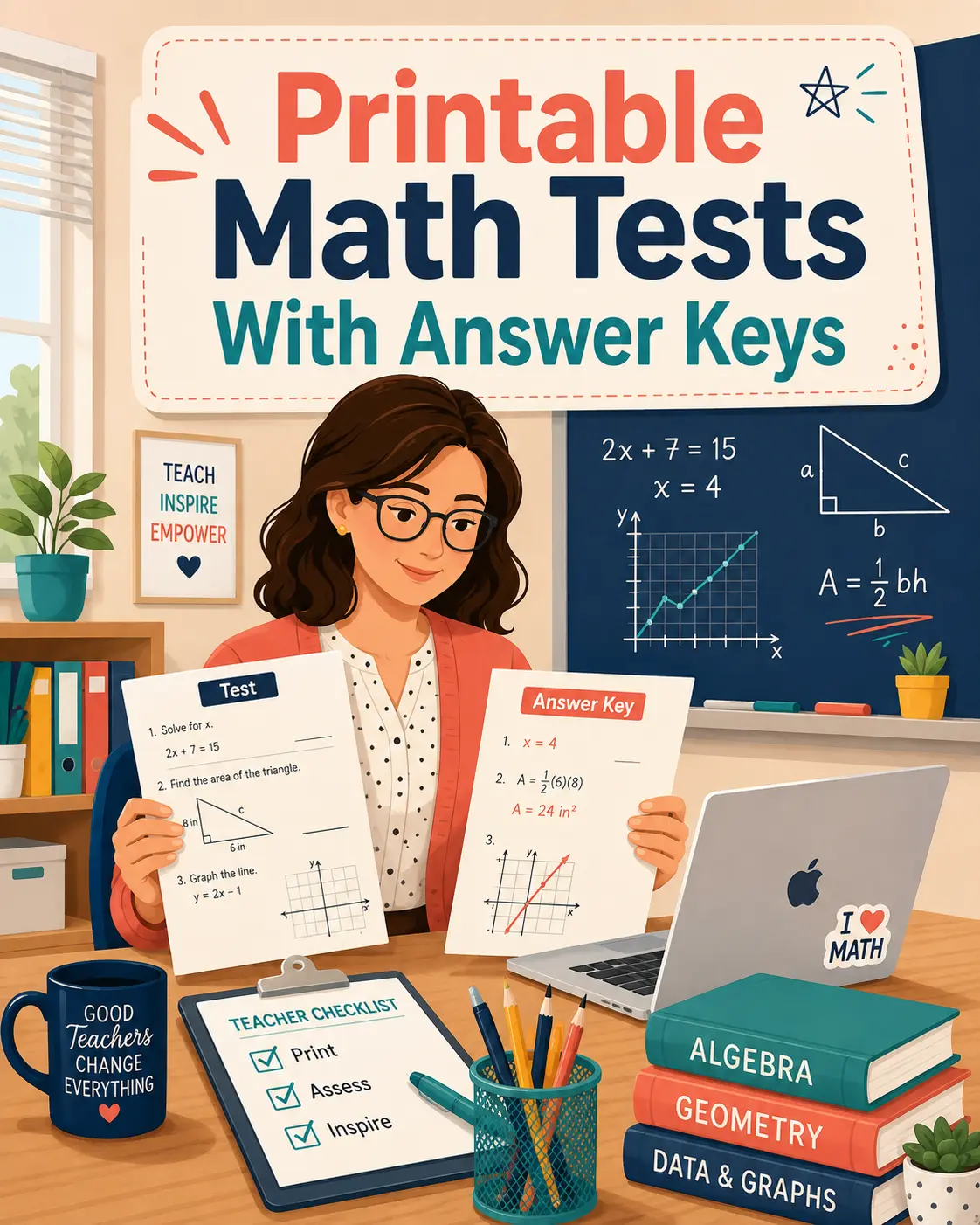
Need a classroom-ready assessment? Use our AI math test generator for teachers to create a printable PDF with answer keys in minutes.
For the full guide, see AI math exams and assessment.
Regional Math Test Generators
Math teachers assess students constantly.
A quick problem at the beginning of class, a question during guided practice, an exit ticket, a quiz and a final unit test all provide information about student understanding.
But they do not all serve the same purpose.
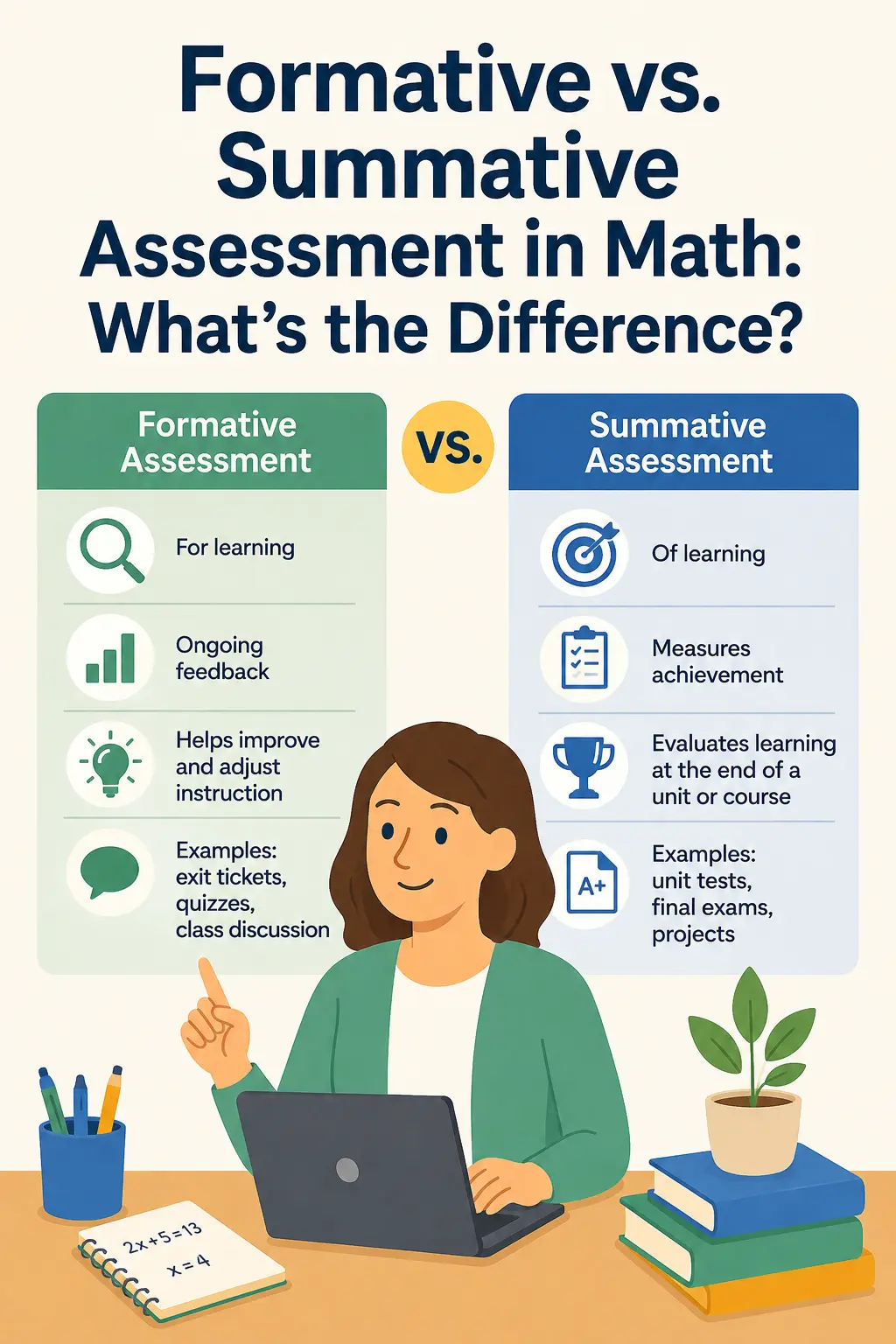
Two important categories are formative assessment and summative assessment.
Understanding the difference can help teachers choose the right assessment at the right time.
What Is Formative Assessment?
Formative assessment happens while learning is still taking place.
Its purpose is to help the teacher and student decide what should happen next.
Examples in mathematics include an exit ticket after a lesson, three problems at the beginning of class, a short quiz halfway through a unit or asking students to explain why a solution method works.
The key question is:
What should we adjust before the learning sequence is finished?
If students struggle with solving equations containing variables on both sides, the teacher can respond before the unit test.
That makes the information immediately useful.
What Is Summative Assessment?
Summative assessment usually happens after a larger section of learning.
A chapter test, unit assessment, midterm or final exam can all serve a summative purpose.
The key question becomes:
What has the student learned by the end of this period of instruction?
Because summative assessments often contribute more heavily to grades, their design needs particular attention.
They should reflect the content students were expected to learn rather than surprising them with unrelated difficulty.
The Same Question Can Serve Different Purposes
The difference is not always the question itself.
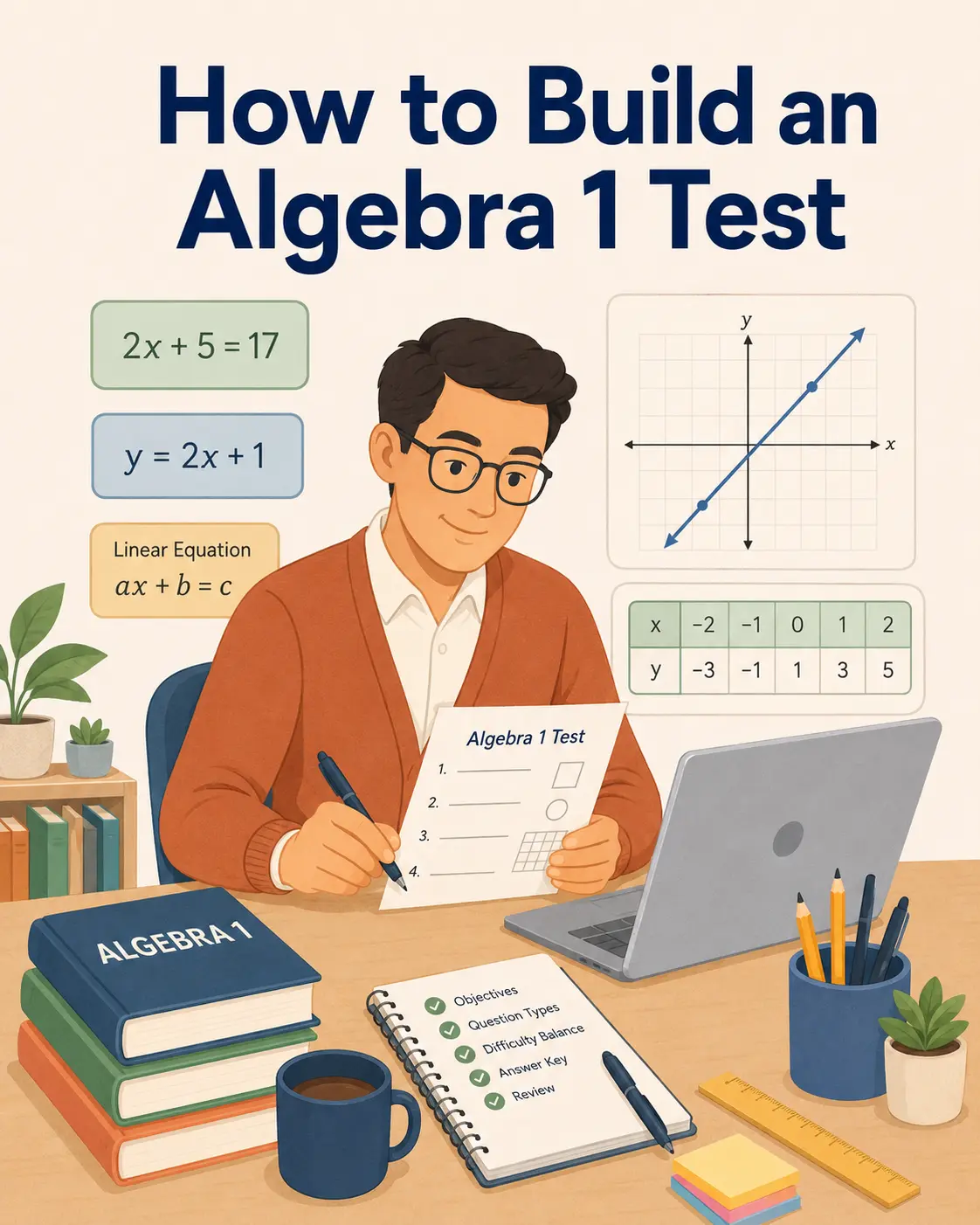
Imagine students solve:
3x + 7 = 25
If the problem appears on a two-question exit ticket used to plan tomorrow's lesson, it is formative.
If it appears on the final unit test, it contributes to a summative judgment.
The purpose and timing of the assessment matter.
Why Math Teachers Need Both
Formative assessment without a later summative check can make it difficult to determine what students ultimately mastered.
Summative assessment without formative checks can identify problems too late.
Used together, they form a cycle:
Teach.
Check understanding.
Adjust.
Practice.
Assess again.
Evaluate mastery.
That cycle is particularly useful in mathematics because later concepts often depend heavily on earlier ones.
Designing Better Summative Math Tests
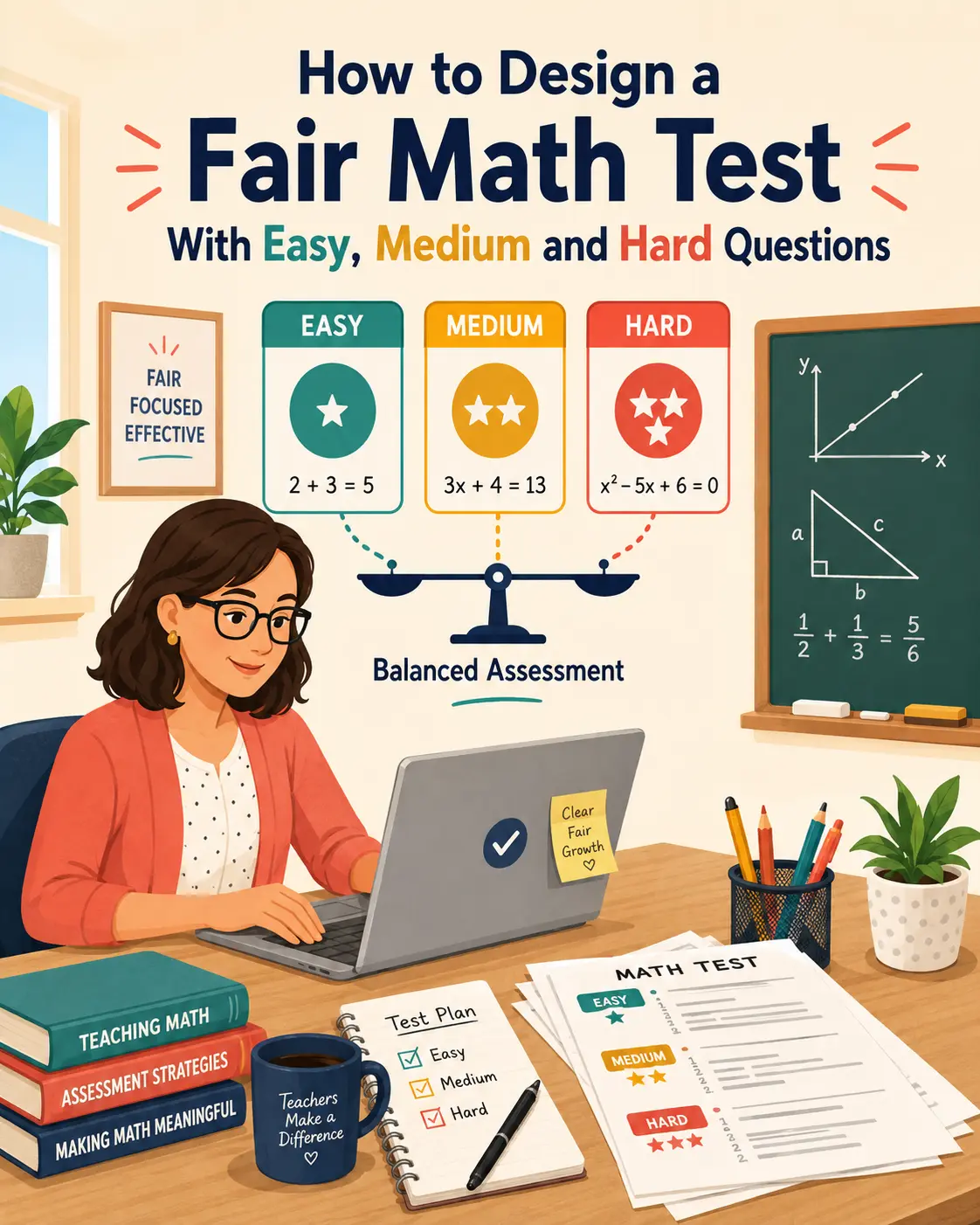
A final unit test should represent the range of skills taught during the unit.
That does not mean every question should have the same difficulty.
A useful assessment can begin with foundational tasks, continue with application and finish with questions requiring deeper reasoning.
The result provides more information than a test composed entirely of routine exercises.
Where AI Can Help
Teachers can use AI during both formative and summative assessment preparation.
For a formative check, generate a few fresh problems around today's learning objective.
For a summative test, create a more structured assessment with multiple difficulty levels and a complete answer key.
MathQuizily focuses on the second workflow by creating printable math assessments, worked answer keys and structured levels of difficulty rather than simply producing a loose list of questions.
The teacher still decides what should be assessed.
Technology simply reduces the preparation required to turn that decision into a usable classroom resource.