MathQuizily ranked #372 in TIME and Statista's World's Top EdTech Companies 2026.Read the announcement
← Back to Blog

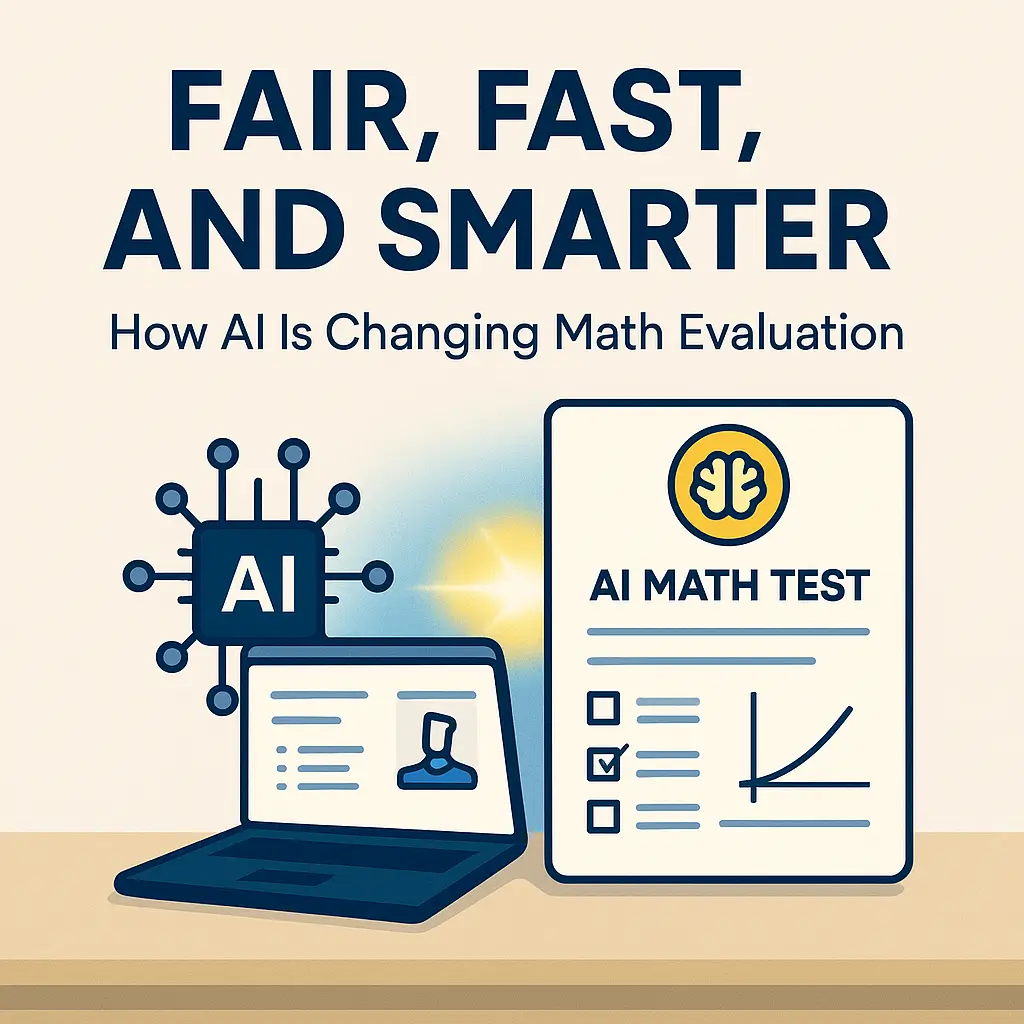
Fair, Fast, and Smarter – How AI Is Changing Math Evaluation

By Edin Adilagic
#AIGrading#AIinEducation#FairAssessment
Fair, Fast, and Smarter – How AI Is Changing Math Evaluation
AI isn't just changing how we learn — it's transforming how we measure learning. See how MathQuizily makes math exams fairer, faster, and smarter.

Need a classroom-ready assessment? Use our AI math test generator for teachers to create a printable PDF with answer keys in minutes.

For the full guide, see math assessment with AI.

In education, few moments matter more than assessment — the point where teaching meets accountability, and where fairness, accuracy, and time often collide.

Traditional exams can take hours to create, format, and grade.

Inconsistencies appear, difficulty varies, and teachers often face the question: *"Did I make this too easy or too hard?"*

Now, AI is helping to rewrite that process.

With tools like MathQuizily, educators can generate curriculum-aligned math exams that are structured, balanced, and ready within minutes.

---

The Challenge: Fairness and Efficiency in Math Testing

Even experienced teachers face three recurring obstacles:

  • Subjective difficulty. Two teachers may design tests with very different challenge levels.
  • Manual workload. Formatting, alignment, and solution keys consume hours.
  • Unequal opportunity. Some classes receive easier versions by chance.
  • The outcome is often uneven grading and unnecessary stress — for both teachers and students.

    AI introduces consistency and saves time by automating the repetitive parts of test design.

    ---

    How AI Supports Fairness in Assessment

    True fairness comes from *balance*: equal difficulty, clarity, and structure.

    AI can help ensure that by automatically:

  • Matching question levels to curriculum standards
  • Distributing Easy/Medium/Hard (E/C/A) items evenly
  • Reducing topic bias and duplication
  • Maintaining identical structure across versions
  • 📊 Students are evaluated on a comparable foundation — not on luck or timing.

    ---

    Faster Doesn't Mean Less Accurate

    Some educators worry that automation means lower quality.

    But AI-based exam generation is structured synthesis, not random creation.

    MathQuizily's system analyzes:

  • Variety of question types (procedural vs reasoning)
  • Concept coverage by curriculum area
  • Step-by-step solution logic
  • Readability and layout of the final PDF
  • The goal isn't just speed — it's better design through consistency.

    ---

    AI Grading: The Next Step

    Assessment automation is evolving from creation to evaluation.

    AI systems such as MathQuizily are developing features that may soon:

  • Detect reasoning errors
  • Recognize partial-credit solutions
  • Compare student answers to model steps
  • Generate structured, individualized feedback
  • The teacher remains the decision-maker — AI simply provides clearer data.

    > "AI should never replace teacher judgment — it should enhance fairness and save time."

    > — *MathQuizily Vision Statement*

    ---

    Why Fairness Matters Worldwide

    Educational inequality often begins with unequal evaluation.

    AI allows fairness to be standardized — without removing creativity or context.

    In Sweden, where MathQuizily was created, AI-driven education is viewed as *human-first innovation*: technology designed to promote equal opportunity, not automation for its own sake.

    ---

    A Smarter Way to Assess

    Imagine this workflow:

    1️⃣ A teacher builds a math test in minutes.

    2️⃣ Students complete it during class.

    3️⃣ AI produces instant analytics by difficulty and learning objective.

    This is no longer theoretical — it's becoming standard practice in AI-supported classrooms.

    MathQuizily embodies that blend of Scandinavian clarity, balanced assessment, and emerging global AI standards.

    ---

    Try It Yourself

    Experience fair, fast, and smarter assessment at

    👉 MathQuizily.com

  • 📄 Generate balanced exams
  • 🧮 Ensure consistent difficulty
  • 🧠 Provide structured feedback
  • 💡 Focus on teaching, not formatting
  • The future of math evaluation isn't automation — it's augmentation.

    AI gives teachers new tools to design, assess, and support with confidence.

    ---

    Related Reading

    👉 The Future of Math Practice: From Khan Academy to AI-Generated Exams

    👉 Why MathQuizily Beats IXL and Mathway for Personalized Math Assessment

    👉 How AI Saves Teachers Hours – Creating Math Tests with One Click

    ---

    *This overview is based on publicly available information as of November 2025. Brand names are used for contextual comparison only; no endorsement or affiliation is implied.*
    Ready to Create Your Custom Math Test?

    Try MathQuizily's Pay-Per-Test feature today. Only $1 USD / €1.25 EUR / 12.50 SEK per test.

    Create Your Test Now →
    📚 RELATED ARTICLES
    1

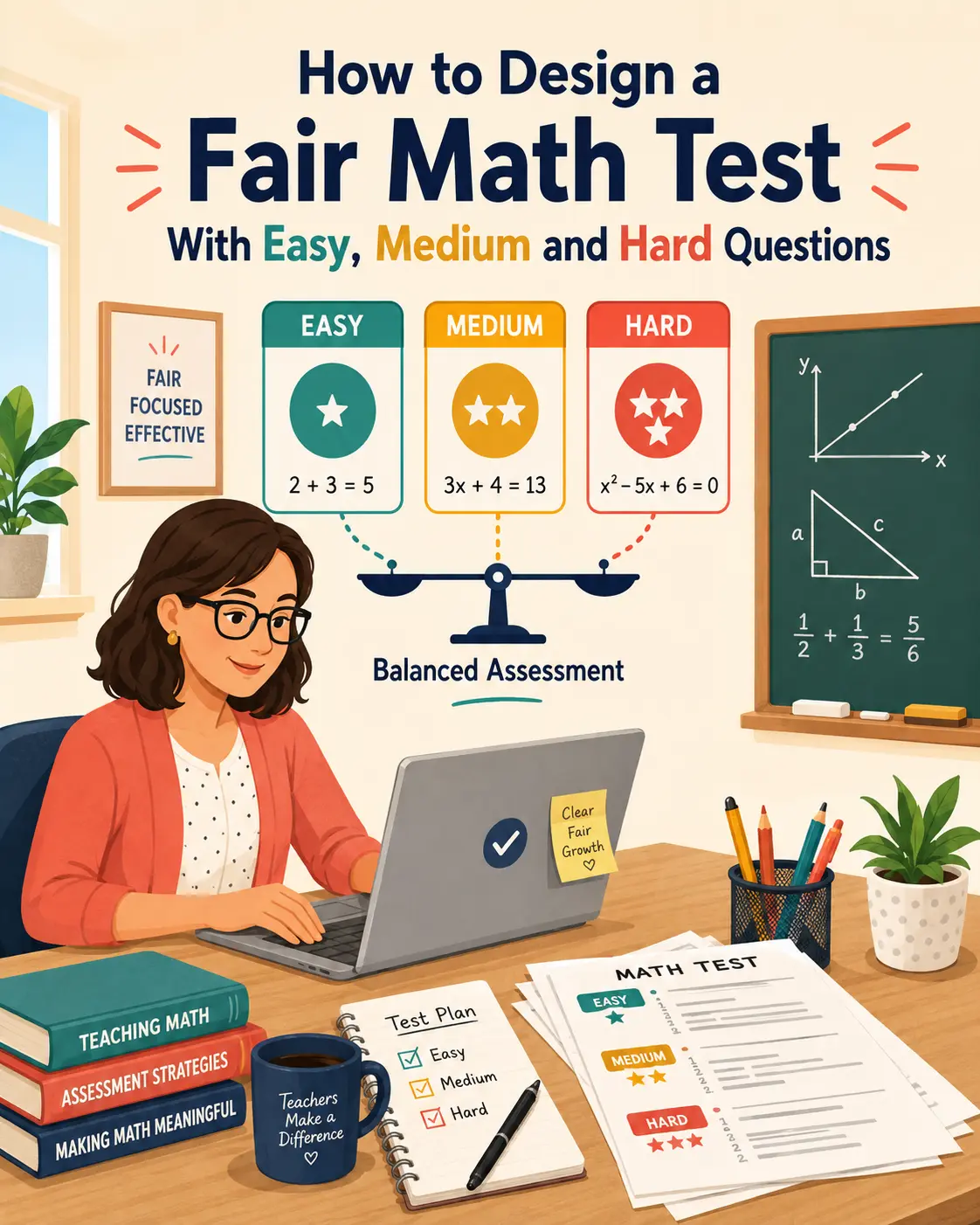
    How to Design a Fair Math Test With Easy, Medium and Hard Questions

    Learn how to design a fair math test using the 5-3-2 model of easy, medium, and hard questions. Create balanced assessments that measure foundational understanding, application, and reasoning.

    Read more
    2

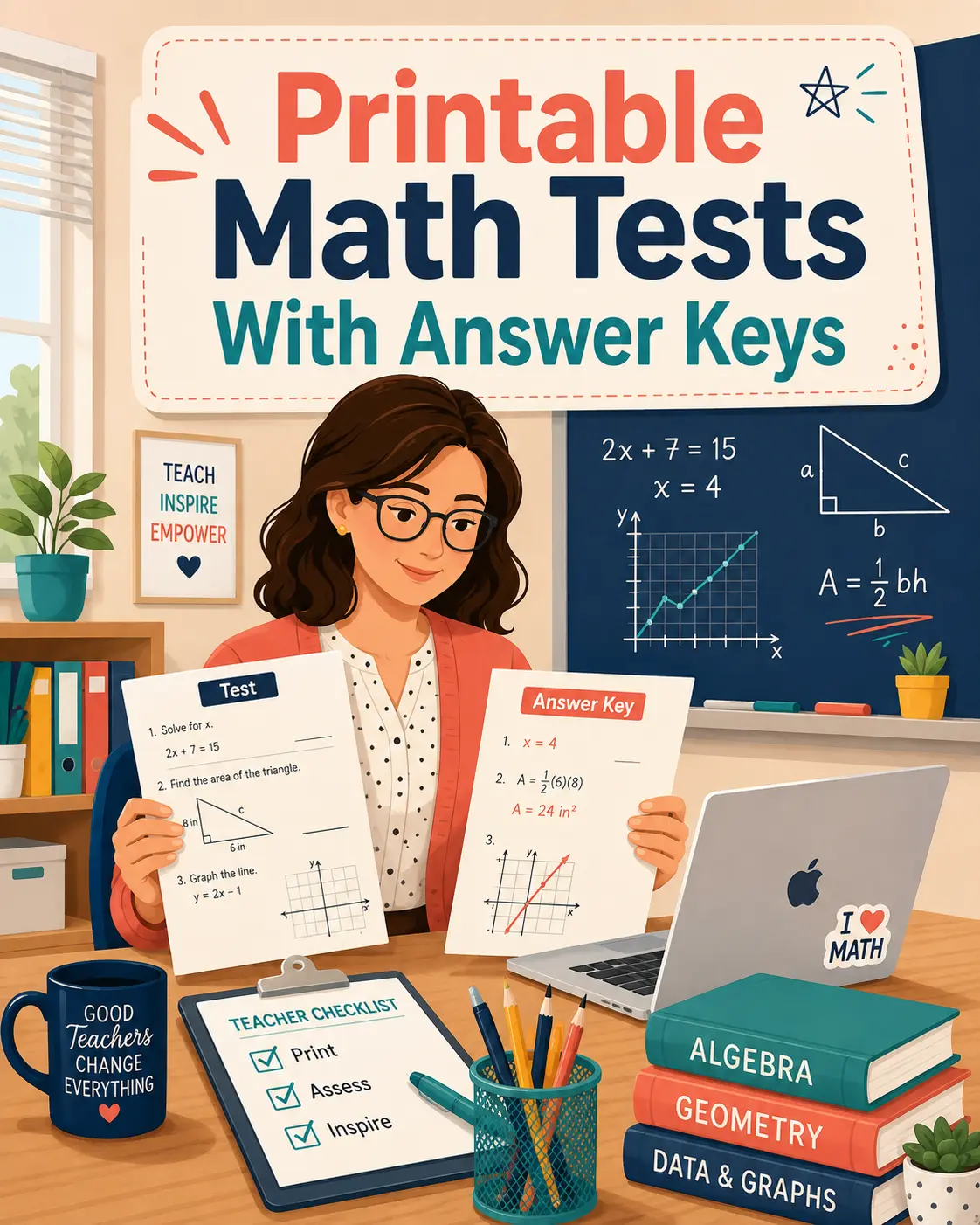
    Printable Math Tests With Answer Keys: What Teachers Should Look For

    A printable math test should be ready for the classroom. Learn what teachers should look for in a test with an answer key, clear formatting, balanced difficulty and real classroom usability.

    Read more
    3

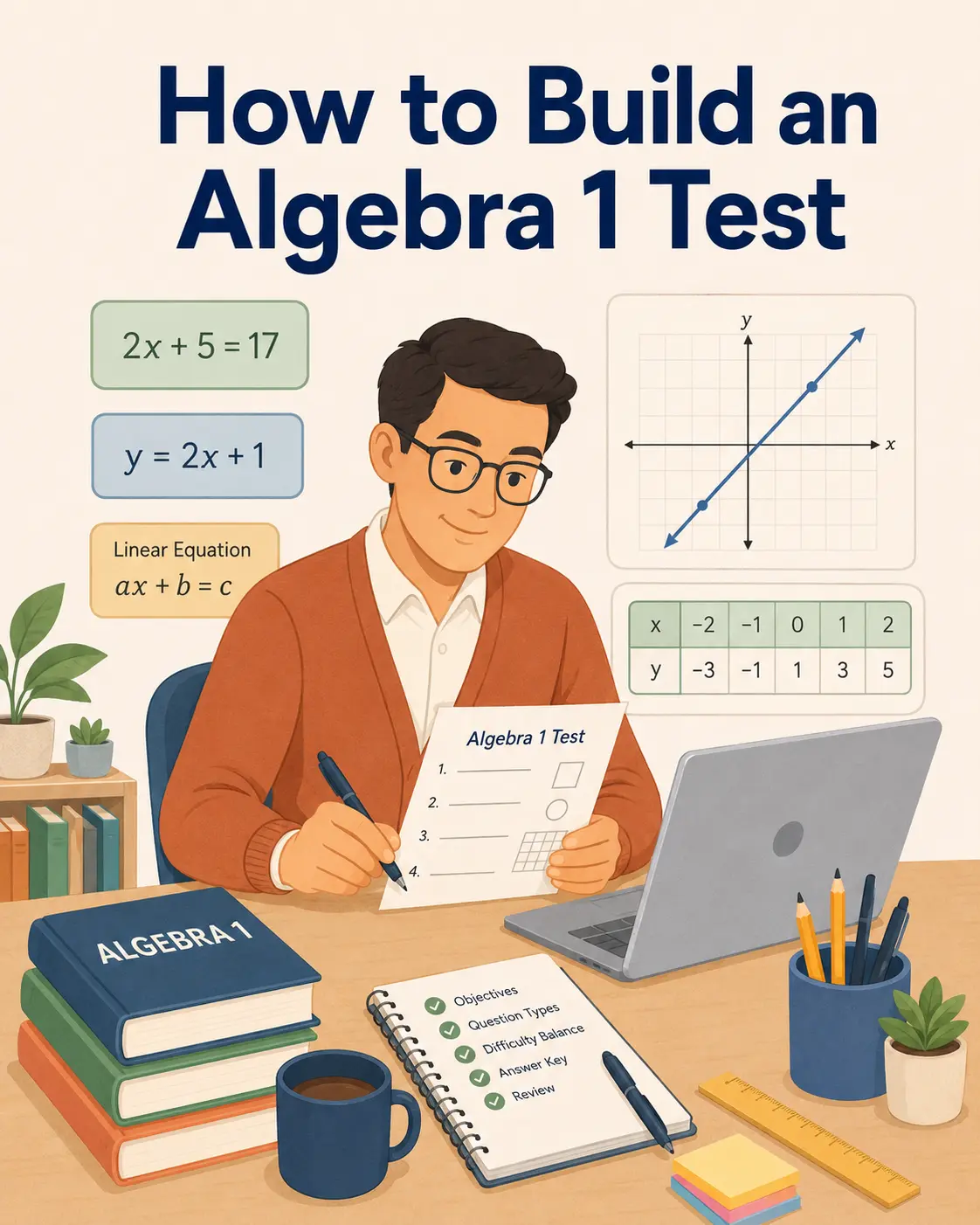
    How to Build an Algebra 1 Test That Actually Measures Understanding

    Learn how to build an Algebra 1 test that measures understanding with varied evidence, multiple representations, balanced difficulty and a worked answer key.

    Read more

    Explore related tools

    Classroom assessment context

    Build the assessment, not just the questions

    MathQuizily helps teachers move from a topic or standard to a printable math test with answer keys, balanced difficulty, and classroom-ready PDF output.

    A useful assessment should make the learning target clear, cover the intended skills, and give the teacher enough information to review the result before students see it. The workflow supports short quizzes, chapter checks, diagnostic tests, homework packets, make-up assessments, and equivalent retake versions.

    Choose a grade, topic, curriculum context, and difficulty level. The generated PDF includes a student version and a separate worked answer key, so teachers can print, review, and grade without reformatting questions or building solutions from scratch. No student account is required to create or print a test.