Need a classroom-ready assessment? Use our AI math test generator for teachers to create a printable PDF with answer keys in minutes.
For the full guide, see AI math exams and assessment.
Regional Math Test Generators
The first math assessment of the school year should answer one important question:
What do my students already understand?
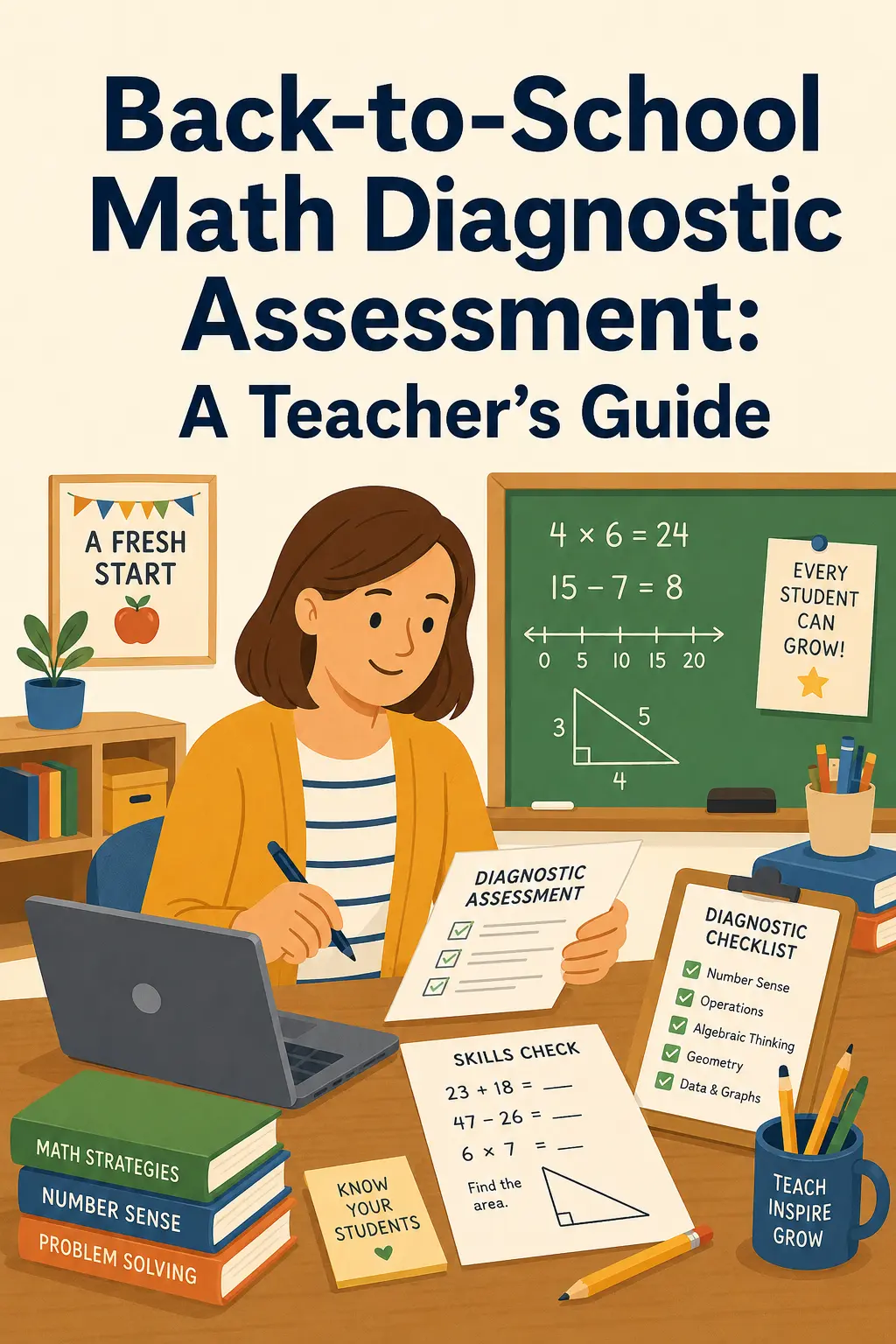
A beginning-of-year diagnostic test is different from a traditional graded exam. Its primary purpose is to give the teacher useful information before deciding what needs review, intervention or extension.
A short, carefully designed diagnostic assessment can reveal far more than a long worksheet.
Create a printable diagnostic math test in minutes with MathQuizily →
What Should a Diagnostic Math Test Measure?
Start with prerequisite knowledge rather than immediately testing everything in the new course.
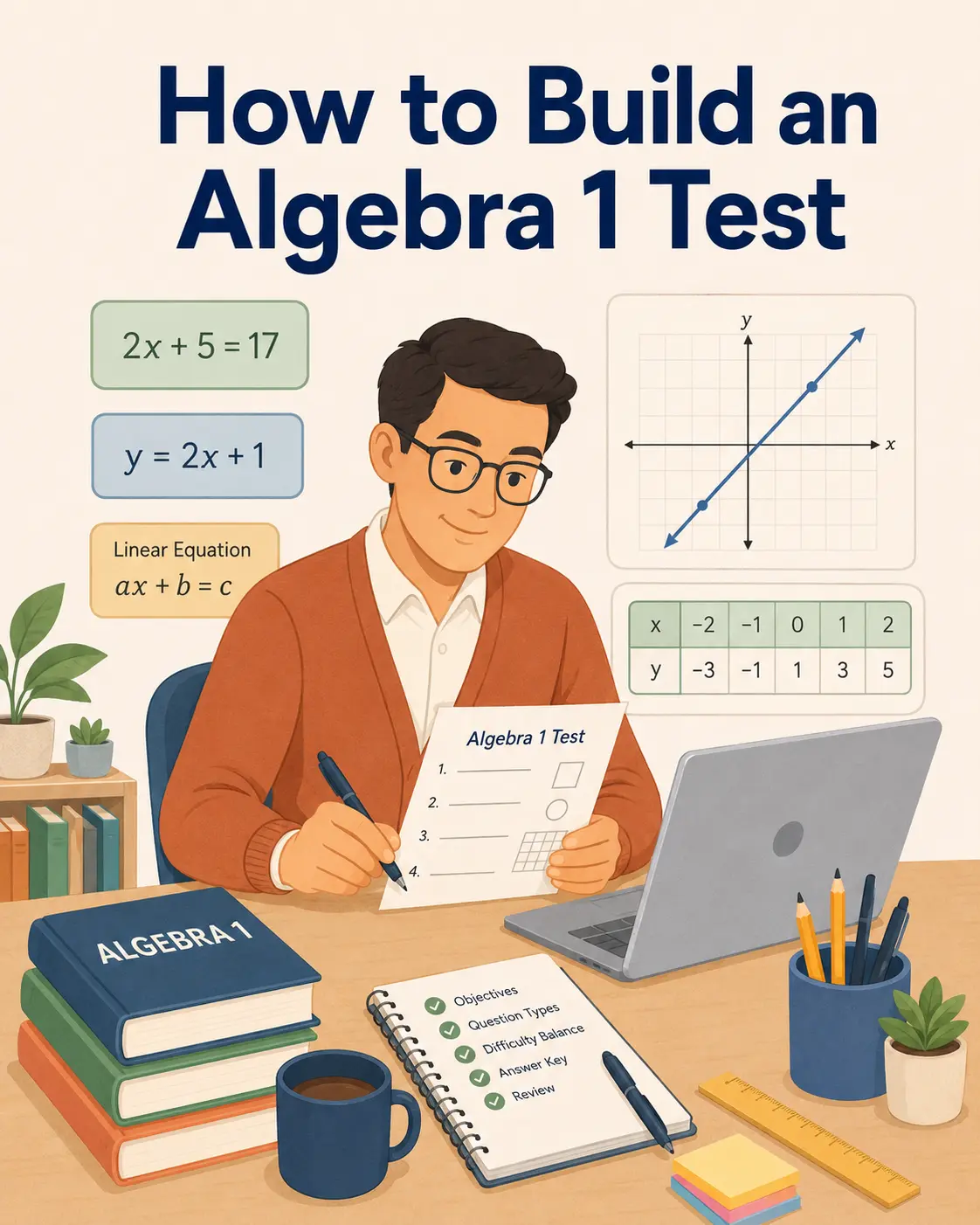
For example, an Algebra 1 teacher might check students' ability to work with integers, fractions, basic equations, coordinate graphs and proportional relationships.
A Grade 7 teacher might review operations with rational numbers, ratios, expressions and foundational geometry.
The goal is not to prove that students already know the upcoming curriculum. The goal is to identify the skills they will need in order to access it.
Keep the Assessment Focused
A diagnostic test does not need 40 or 50 questions.
A shorter test can be more useful when each question has a clear purpose.
For every question, ask:
What will this answer tell me about the student?
If two questions provide essentially the same information, one may be enough.
That leaves room for questions measuring different prerequisite skills.
Include Different Levels of Thinking
If every problem is extremely easy, the assessment will identify struggling students but tell you little about students who are already ready for more challenging work.
If every question is difficult, the opposite problem appears.
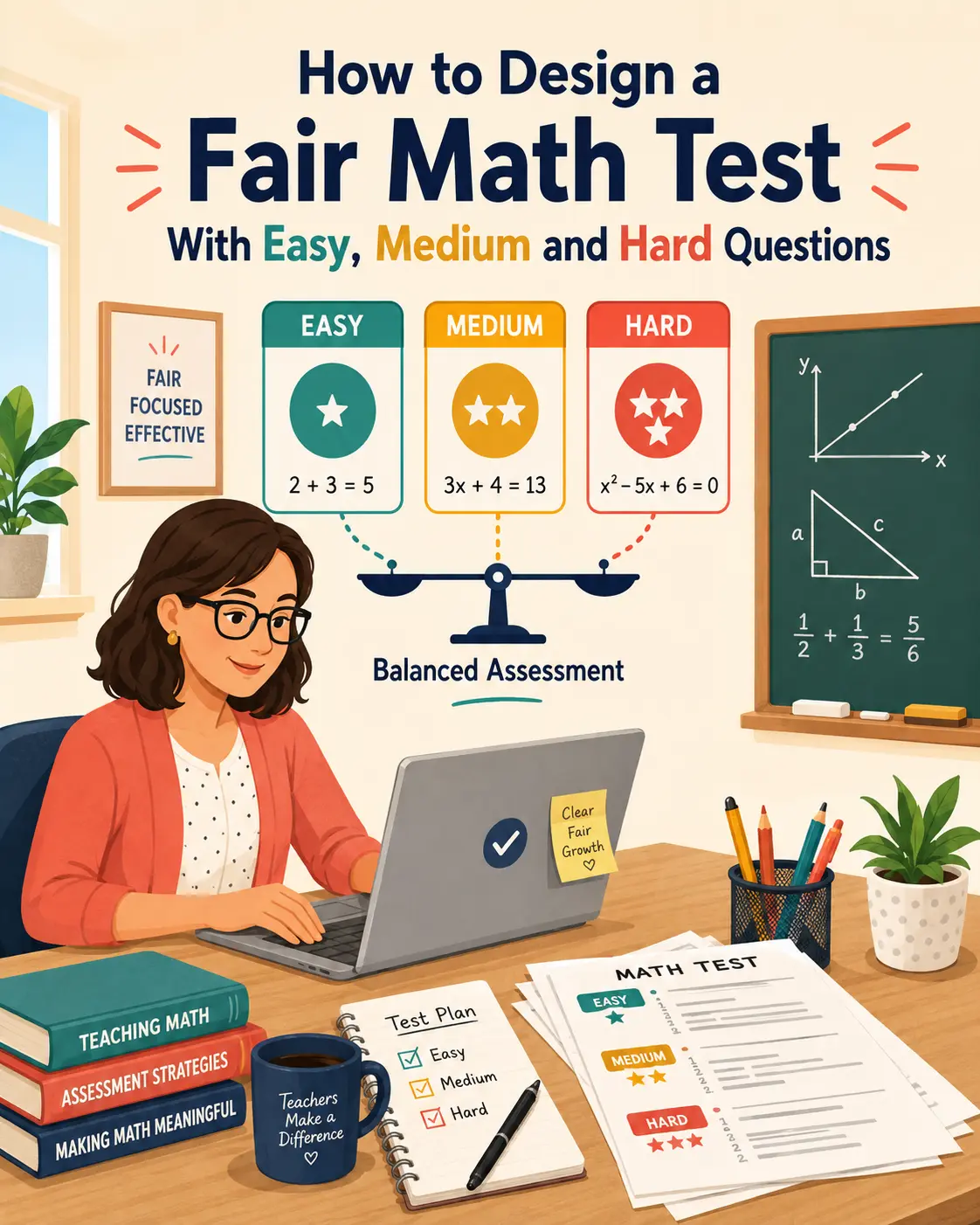
A balanced assessment can include foundational questions, application questions and a small number of more demanding problems.
That allows teachers to see a wider range of readiness within one class.
Look Beyond the Final Score
Suppose two students both score 60%.
That does not necessarily mean they need the same support.
One student might understand equations but struggle with fractions.
Another might be strong numerically but weak when interpreting graphs.
For a diagnostic assessment, patterns matter more than the total percentage.
Group results by skill or topic whenever possible.
That makes the assessment actionable.
| Skill area | Class result | Instructional response |
|---|---|---|
| Almost everyone secure | 85–100% | Short warm-up only |
| Partially remembered | 50–80% | Dedicated review lesson |
| Widely forgotten | Below 50% | Re-teach before the new unit |
| Small group gap | Mixed | Targeted intervention |
What Should You Do With the Results?
Diagnostic results can help determine the first few weeks of instruction.
A skill that almost everyone remembers may need only a brief warm-up.
A skill that half the class has forgotten might need a dedicated review lesson.
A small group with a specific gap may benefit from targeted intervention.
Students who demonstrate strong prerequisite knowledge may be ready for enrichment sooner.
The assessment has done its job when it changes what the teacher does next.
Creating a Printable Diagnostic Test
Teachers can build a diagnostic assessment manually by selecting prerequisite skills and writing representative questions.
Another option is to use a math test generator to speed up question creation and formatting.
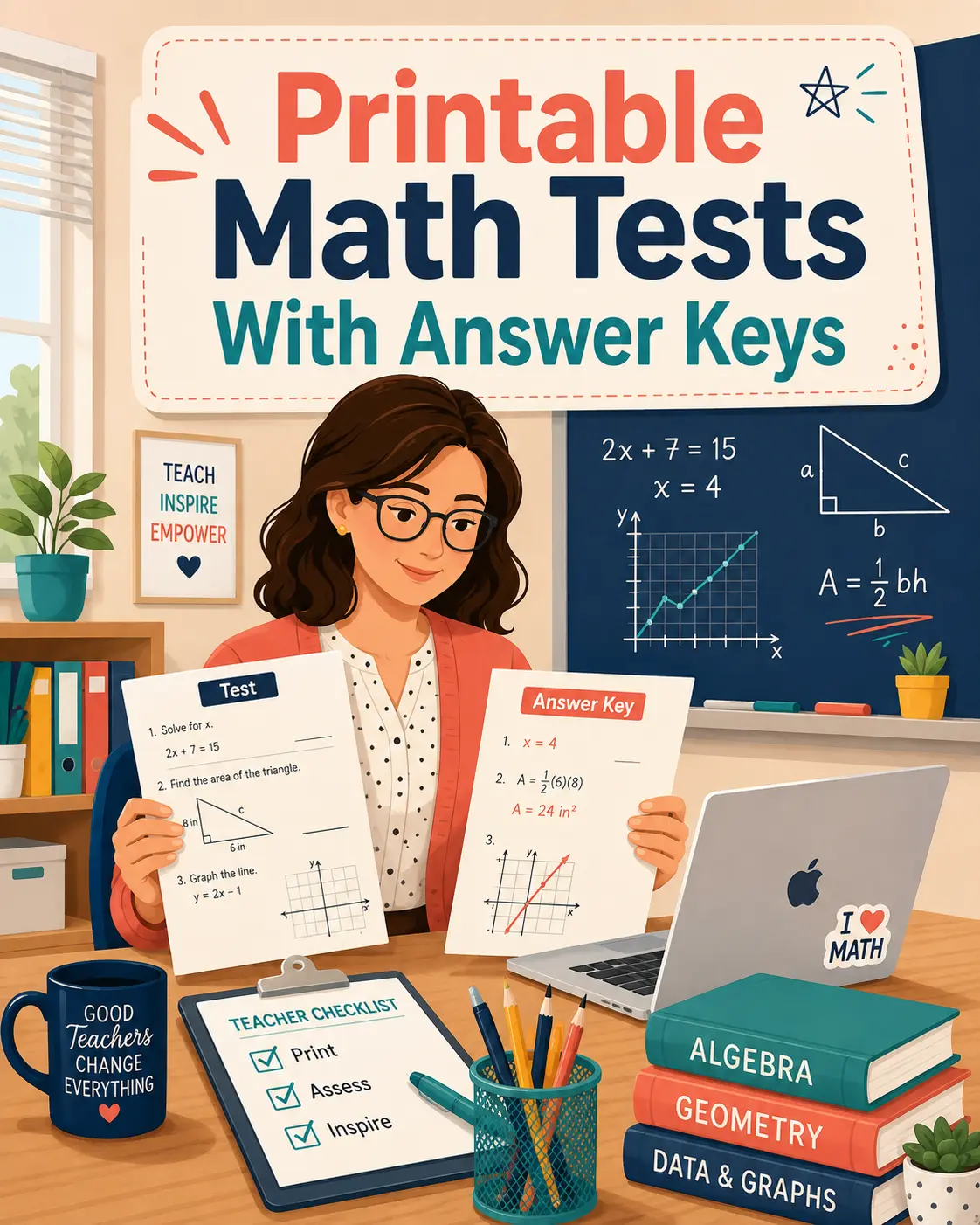
MathQuizily creates printable tests with answer keys and balanced levels of difficulty. For U.S. teachers, its Common Core and grade-specific pages can be used as starting points when selecting appropriate topics, and a diagnostic test can be generated directly.
The important step is still teacher review.
Remove questions students have not reasonably been expected to know yet and make sure the final assessment reflects the actual prerequisites of your course.
A Diagnostic Assessment Is a Starting Point
The first test of the year should not simply produce a grade.
It should provide a map.
Where is the class strong?
Where are the gaps?
Which concepts need whole-class review?
Which students need additional support?
Which students are ready to move faster?
Answer those questions and the diagnostic assessment becomes much more valuable than another first-week worksheet.
FAQ – Back-to-School Math Diagnostic Assessment
What is a math diagnostic assessment?
A diagnostic assessment is a short test given before instruction begins. It measures prerequisite skills so the teacher can see what students already understand instead of assigning a grade.
How long should a beginning-of-year math test be?
Short enough that every question has a purpose — often 10 to 20 questions. Each item should measure a different prerequisite skill rather than repeating the same one.
Should a diagnostic test be graded?
Most teachers do not grade it. The value comes from the patterns in the results, not the score, so students are more likely to show what they actually know.
What should a diagnostic test cover?
Prerequisite skills for the upcoming course, not the new curriculum itself. An Algebra 1 diagnostic might cover integers, fractions, simple equations and graphing rather than quadratics.
How do I turn diagnostic results into a plan?
Group the results by skill instead of by total score. Skills most students remember need only a warm-up, partially remembered skills need a review lesson and widely forgotten skills need re-teaching before the new unit.
Ready to Build Your Diagnostic Test?
Choose the grade, prerequisite topics and difficulty, then print a diagnostic assessment with a complete answer key.